Search is changing. People do not only type short keywords into Google anymore. They ask full questions, compare options, and expect a clear answer. Increasingly, they do not even read the answer themselves — an AI agent reads it for them.
Google has AI Overviews and AI Mode. ChatGPT has search and shopping results. Perplexity, Gemini and other AI tools are becoming part of the discovery journey.
This does not mean SEO is dead. It means SEO is becoming more direct, more structured and more trust-based. The new question is simple:
Can AI understand what your brand does, why it matters and when to recommend it?
What is AI SEO (and why people now call it GEO)?
AI SEO is the practice of making your website, content and brand signals easier for AI systems to understand and cite.
You will increasingly see this discipline called GEO — Generative Engine Optimization. It is the formal industry term for the same thing this guide describes: optimizing not for a ranked list of links, but for inclusion inside the answers that generative engines produce. AI SEO and GEO are used interchangeably; if you want to sound current in a pitch deck, GEO is the word.
Classic SEO is mostly about ranking in search results, while GEO is about showing up inside answers.
That can mean:
being mentioned in a Google AI Overview
being linked in AI Mode
being recommended in ChatGPT
appearing in product comparisons
becoming part of an answer when users ask for options
All this to make your brand clear enough to be used as a reliable source.
Why GEO matters now
AI answers are becoming a new layer between people and websites. A user may ask: "What is the best creative agency for F&B branding in Dubai?”, "How do I launch a Telegram ads campaign in Indonesia?", or "Compare boutique marketing agencies for luxury hospitality brands."
While in classic search the user sees many blue links, in AI, the user may see a short answer, a few sources and a few recommended names. That changes the approach.
The brand that wins is not always the one with the loudest homepage, but the one with the clearest content, strongest authority and best supporting proof.
How AI search is different from classic search
Classic search is built around pages and rankings. AI search is built around answers and evidence.
Google says its AI Overviews and AI Mode can use query fan-out. This means the system may run multiple related searches across subtopics before forming an answer.
So one user question can turn into many smaller searches:
"best agency for F&B Dubai"
"restaurant branding case study Dubai"
"creative agency social media growth case study"
"brand activation examples Dubai"
"agency with AI marketing expertise"
If your content only answers one narrow keyword, you may miss the wider answer. AI search needs context.
The new player: agentic workflows
There is one more shift worth naming before the checklist. The bot visiting your site is no longer always a passive crawler indexing pages. It is often an agent — an AI system navigating the web to execute a task on a user's behalf: comparing options, pulling pricing, summarizing your services, even completing a transaction.
Agents do not browse the way people do. They make HTTP requests and read raw HTML. They typically do not execute JavaScript, click cookie banners, or scroll to find content buried below the fold. Navigation menus, footers and ads are just noise they have to fight through to find what your brand actually offers.
So the modern goal is not only to be readable by humans and rankable by search engines, but to be agent-readable: structured cleanly enough that an AI agent can parse your value proposition in one pass and act on it correctly. The steps below build toward exactly that.
How to boost your GEO
1. Write pages that answer real questions
Do not only write generic service pages like: "We provide full-service marketing solutions." — that says almost nothing.
Write pages that answer specific questions:
How much does a brand strategy project cost?
What is included in a social media launch?
How does an F&B brand grow on Instagram in Dubai?
What makes a good pop-up activation?
How should brands use AI in content production?
AI search works well with clear questions and clear answers, so structure your blog around the questions your clients actually ask.
2. Make your expertise visible
AI systems look for reliable signals. A brand should show:
who wrote the article
why the team knows the topic
what examples support the point
what projects prove the experience
what market or niche the company understands
For us, for example, this can mean showing real work in:
F&B branding
Dubai lifestyle marketing
fashion and streetwear
AI-assisted creativity
social media strategy
brand activations
Web3 and digital products
Be specific and never hide expertise behind vague agency language.
3. Use simple structure — and make it agent-readable
AI tools need to parse content quickly. That means:
one H1
clear H2 sections
short paragraphs
useful bullet points
descriptive image alt text
FAQ blocks
summary sections
internal links to related articles
This is good for people too: nobody wants to read a wall of agency poetry.
There is now a direct technical implementation of this "make it parseable" principle: llms.txt. It is a proposed standard — a plain Markdown file placed at the root of your domain (e.g. yourdomain.com/llms.txt) that gives AI agents a clean, machine-readable summary of your brand, services and most important pages.
Think of it as the GEO counterpart to robots.txt. Where robots.txt tells traditional crawlers which pages they may visit, llms.txt tells AI agents what matters and what it means — stripping out the navigation, footers and ads so the agent gets a high-value summary instead of noise. The format was proposed by Jeremy Howard of Answer.AI in 2024, and while it is not yet an official web standard, it has been adopted by names like Anthropic, Perplexity, Stripe and Cloudflare.
It is not a magic ranking trick, and it does not replace good content. But for a brand that wants to be cited accurately, it lowers the barrier for an agent to understand who you are and recommend you correctly. If steps 3 and 6 are about making pages clear, llms.txt is the file that hands that clarity to the machine directly.
4. Build topic clusters
One article is not enough. AI search needs to understand that your website has depth on a topic.
For example, if we want to own "AI marketing agency" or "creative agency in Dubai," the blog should not have only one article about AI. It should have a cluster:
How brands can use AI without losing taste
What AI means for SEO
How AI changes content production
Why human editing matters more now
AI tools for creative teams
Case study: AI-assisted campaign workflow
Each article supports the others. Together, they create authority.
5. Add proof, not just opinion
AI answers prefer claims that can be supported, so add proof:
case studies
numbers
screenshots
campaign results
before/after examples
client categories
quotes from team members
references to trusted sources
A sentence like this is weak: "We help brands grow online." A sentence like this is stronger: "For Electric Pawn Shop, JETA helped double social media growth during a 20% market drop."
6. Make product and service pages more direct (and agent-friendly)
Your service pages should answer the basics clearly:
what the service is
who it is for
what the process includes
what deliverables the client gets
what problems it solves
what examples prove the work
how to contact the team
AI cannot recommend a service it cannot understand: a beautiful but vague landing page may look good to humans and still fail AI discovery.
This matters even more in the agentic era. When an agent is comparing providers to answer "best agency for a restaurant launch in Dubai," it needs to extract your offer, your fit and your proof from raw HTML in a single read. If that information is locked inside an image, a slider, or a script the agent never executes, you are effectively invisible to it. Put the substance in plain, structured text — and consider summarizing your core services in your llms.txt (see step 3) so agents get a pre-formatted version of exactly what you want them to cite.
7. Use structured data
Structured data helps search engines understand what is on a page. Google says structured data should match visible content on the page.
Do not add fake markup: make the page clearer first, then mark it up.
8. Keep content fresh — and show when you last verified it
AI search often works with live or recent information. Outdated content can still rank, but it may be less useful for fast-moving topics like:
AI tools
platform updates
social media algorithms
advertising products
creator marketing
search changes
Update strong articles every few months. And add a visible date — but be deliberate about it: for high-stakes or fast-moving topics, a "last verified" or "last updated" timestamp is a direct trust signal that LLMs often use to weight how recent and reliable your information is. "Last updated: June 2026" tells both a reader and a model that the page is being maintained, not abandoned. On topics where accuracy and recency matter (pricing, platform features, regulations), that small signal can be the difference between being cited and being skipped.
9. Earn mentions outside your own website
AI search does not only rely on your website, third-party mentions matter. That can include press articles, partner websites, awards pages, podcasts, public reviews
If other credible sources describe your brand clearly, AI has more context — this is very important for smaller brands. Owned content explains who you are, and earned media confirms it.
10. Optimize for comparison queries
People use AI tools to compare. They ask:
best agencies for X
JETA vs other agencies
agency for F&B branding in Dubai
agency for AI content strategy
how to choose a creative agency
Write content that helps with comparison, for example:
How to choose a creative agency for a restaurant launch
What to ask before hiring a social media agency
Creative agency vs performance agency: what is the difference?
What makes a good brand activation partner?
This makes your brand visible in high-intent moments.
GEO checklist
Use this before publishing a new article:
Does the title answer a real question?
Is the intro clear in the first 5 seconds?
Does the article have one main idea?
Are the headers descriptive?
Is there a short answer near the top?
Are claims supported by proof?
Are examples specific?
Are related articles linked?
Are images named and described properly?
Is the page indexable — and readable in raw HTML, without JavaScript?
Is there a "last updated" or "last verified" date where recency matters?
Does your site have an llms.txt summarizing what matters?
Is the content useful without the reader needing to contact you?
Would an AI system — or an AI agent acting for a user — understand who this is for?
What to measure
GEO is not only about rankings. Apart from that, track:
organic traffic
branded search growth
impressions in Google Search Console
clicks from AI-heavy queries
conversions from blog pages
mentions in AI tools
share of voice in AI answers
third-party citations and backlinks
You can also manually test prompts every month. Ask ChatGPT, Gemini, Perplexity and Google AI Mode questions like:
"Best creative agencies in Dubai for F&B brands"
"Who can help with AI marketing strategy in Dubai?"
"Examples of good pop-up activation agencies"
"Agencies that understand culture and social media in the UAE"
Then check:
Is JETA mentioned?
Are competitors mentioned?
What sources are cited?
What language is used to describe each brand?
What content is missing from your website?
That becomes your content roadmap.
Final thought
GEO is not a mystery. It is clear writing, strong structure, real proof and public authority — now delivered in a form that machines, not just people, can read.
The old SEO game was often about ranking pages. The new GEO game is about becoming a useful answer, and being legible to the agents that increasingly fetch those answers on a user's behalf.
The brands that explain themselves clearly will be easier to find, and unfortunately, the brands that hide behind vague words — or behind code an agent cannot read — will be harder to recommend.
More articles you may like:
Robots.txt? No, LLM.txt, Please: How to Boost Your AI SEO

7 Trends & Forecasts for 2026: AI, Culture, Design, and the Future of Marketing

Can AI Lead Creativity? JETA's CCO on Speed without Drift

The Imperative of Reintroducing Human Chaos into AI Creations
5 Unmissable Trends from Cannes Lions 2024: Shaping the Future of Advertising and Digital Marketing

6 Graphic Design Trends for 2025
From Viral Moment to Dubai Mall: How HSB by Hasbulla Became a Global Streetwear Success Story

2X Social Media Growth During 20% Market Drop: Electric Pawn Shop Case Study

McDonald’s Taps Into Anime Craze with the WcDonald’s Campaign: A Creative Review by JETA
The Dawn of Web3: Navigating the Future of the Internet
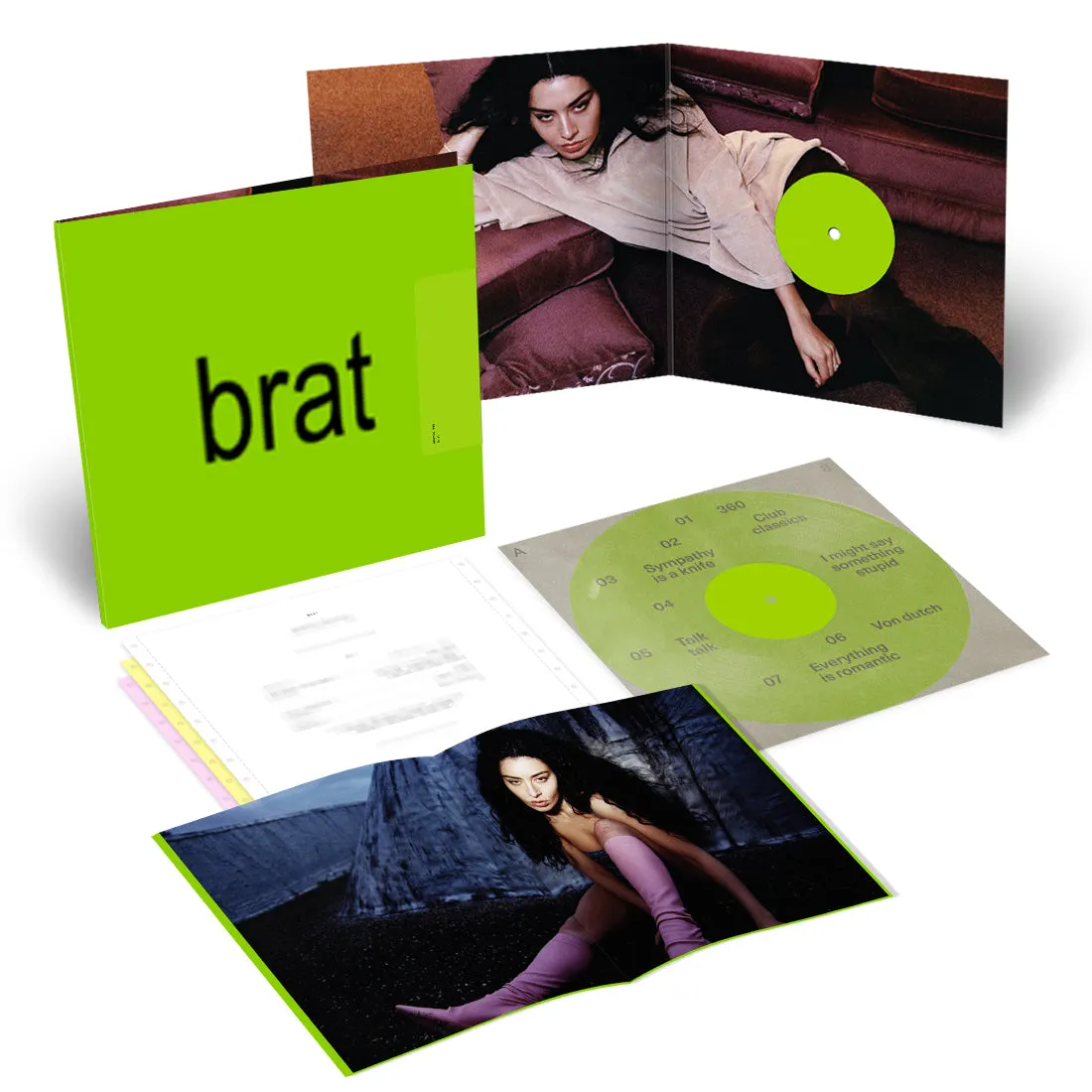
Charli XCX’s ‘brat’ Album Campaign: A Masterclass in Modern Music Marketing
Full-On Digital: The Evolution of Marketing and Advertising in the Modern Era