As we enter a new digital era, the buzz around cryptocurrencies and NFTs has reached a fever pitch. At JETA, we emphasize the true game-changer: blockchain technology.
Far more than just a technological advancement, it is laying the groundwork for a monumental shift in digital interactions, promising a more equitable internet.
In this article, we’ll explore the evolution of the web, key Web3 concepts, its impact on the digital landscape, and examine real-world applications. But to understand where we’re headed, let’s take a quick look at where we’ve been.
The Evolution of the Web
The evolution of the internet can be understood through three distinct phases: Web 1.0, Web 2.0, and Web 3.0.
Long Story Short – The History of Web
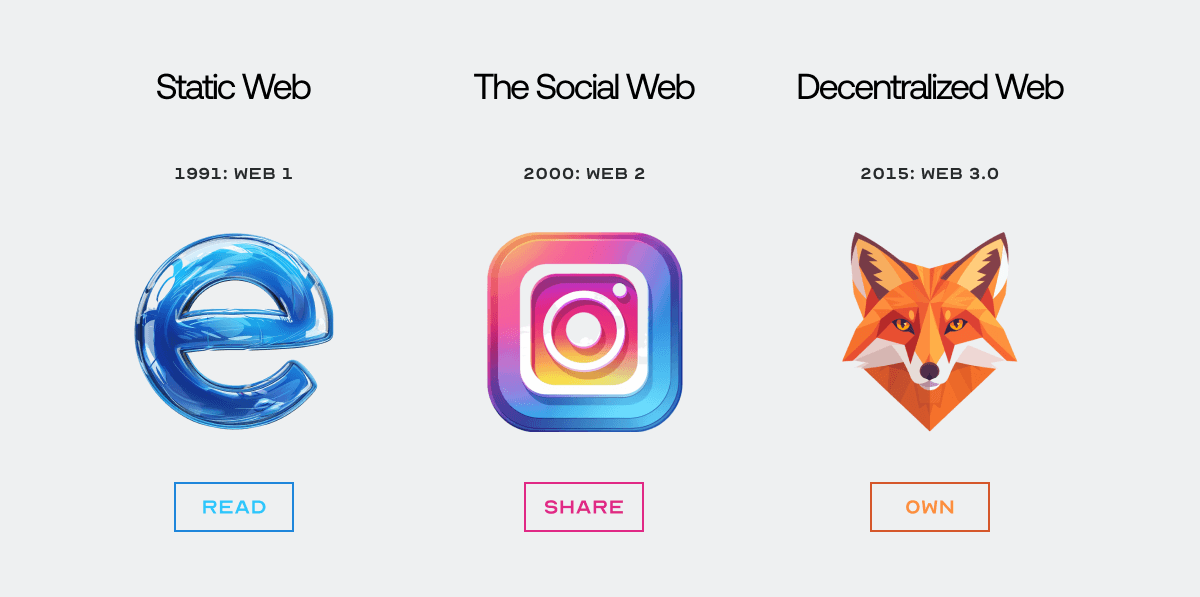
Web 1.0, which emerged in 1991, is often referred to as the Static Web. This era was characterized by read-only content where users were primarily passive consumers of information displayed on static websites.
The turn of the millennium brought Web 2.0, the Social Web, which revolutionized online interaction by enabling user-generated content and sharing. This phase saw the rise of social media platforms, blogs, and wikis, transforming users into active participants in content creation and dissemination.
Since 2015, we have entered the era of Web 3.0, the Decentralized Web, where the focus shifts to ownership and value transfer. Powered by blockchain, Web 3.0 emphasizes decentralization, giving users control over their data and digital assets while facilitating peer-to-peer transactions and the creation of decentralized applications (dApps). This phase promises a more equitable and secure digital landscape, fundamentally altering how we interact with the internet.
As Wang et al. (2022) note, “Web3 is hyped as a significant shift towards an Internet of Value and Metaverse, though definitions and standards are still emerging.”
Key Terminology in the Web3 Landscape
To navigate this new terrain, it’s essential to understand some key concepts:
Blockchain: A digital ledger of transactions, visible to all participants.
Token: Digital currency representing value or access within a specific network.
NFT (Non-Fungible Token): Unique digital assets, from art to tweets and beyond.
Smart Contract: Self-executing contracts with terms written directly into code.
Metaverse: A virtual universe for interaction, trade, and entertainment.
Now that we’ve covered the basic concepts, let’s explore how Web3 is impacting the digital landscape.
The Impact of Web3 on the Digital Landscape
Web3 is promised to revolutionize the internet in several key ways:
Decentralization and Ownership
Web3’s decentralized nature ensures that control is distributed among users rather than being concentrated in the hands of a few large corporations. This shift empowers individuals with ownership and control over their data and digital assets, create a more equitable digital economy.
Enhanced Security and Transparency
Blockchain technology’s inherent security features, such as immutability and cryptographic encryption, make it significantly harder for scammers to alter or corrupt data. This transparency builds trust among users and enhances the overall integrity of digital transactions.
New Business Models and Revenue Streams
Web3 introduces innovative business models and revenue streams that were previously unimaginable. For instance, NFTs enable artists and creators to monetize their work directly, while decentralized finance (DeFi) platforms offer new ways to earn, lend, and invest digital assets.
Leveraging Web3 for Brand Growth
At JETA, we’re excited about Web3 not just for its technological prowess, but for its potential to create genuine connections. Web3 offers innovative solutions for brands:
Metaverse Marketing: Create immersive brand experiences in virtual worlds.
NFT Campaigns: Engage customers uniquely through digital collectibles.
Decentralized Social Media: Connect with audiences in a more empowering digital landscape.
Blockchain-Based Influencer Collaborations: Forge authentic partnerships in the Web3 space.
Let’s look at a real-world example of how a major brand is leveraging Web3:
Case Study: RTFKT and Nike CryptoKicks
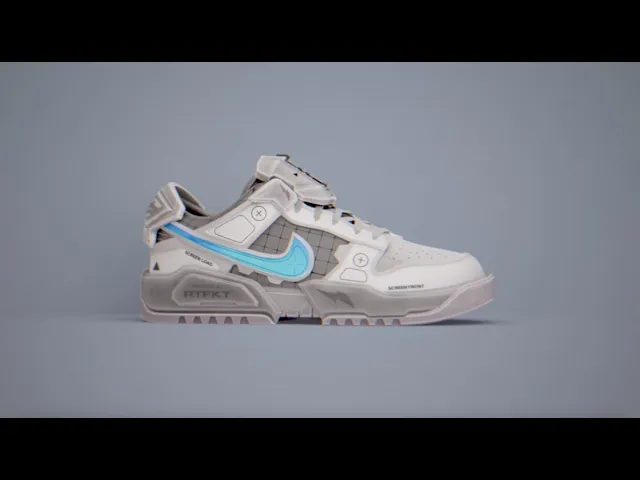
Nike’s “Cryptokicks” initiative represents a blend of physical and digital product ownership by tokenizing sneakers on the blockchain, addressing counterfeit issues and providing verifiable proof of authenticity and ownership.
The project is a collaboration between Nike and RTFKT (“artifact”), which Nike acquired in December 2021 to enhance its digital initiatives. Founded in 2020, RTFKT is known for creating virtual sneakers and digital collectibles. This acquisition improved Nike’s presence in the Web3, positioning the brand as a pioneer in using blockchain for consumer goods and potentially influencing industry-wide adoption.
RTFKT and Nike CryptoKicks
This not only strengthens brand trust but also opens new revenue streams through the resale of digital assets.
Innovative Channels to Explore
The Web3 ecosystem opens up new avenues for customer engagement:
Crypto Rewards Programs: Incentivize customer loyalty with cryptocurrency-based rewards.
DAO (Decentralized Autonomous Organization) Participation: Engage customers in governance and decision-making processes.
VR/AR Experiences: Create immersive and interactive brand experiences.
Smart Contract Utilization: Automate transactions and interactions, enhancing efficiency and trust.
To illustrate some of these concepts in action, let’s examine another case study:
Case Study: Decentraland’s Virtual Real Estate
Decentraland is a virtual world powered by the Ethereum blockchain where users can buy, sell, and build on parcels of virtual land using the platform’s cryptocurrency, MANA.
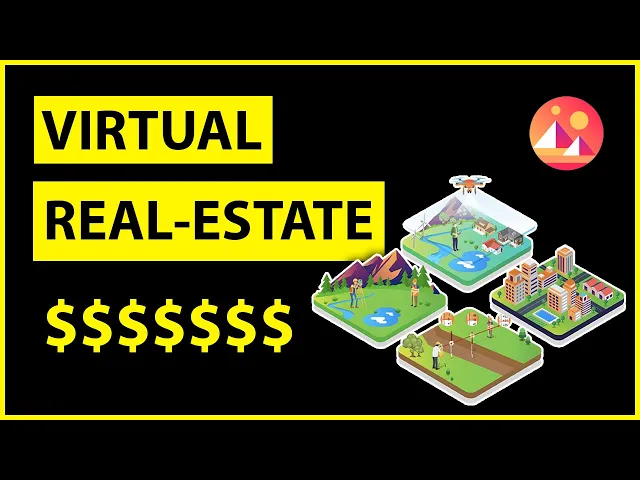
The initiative showcases the innovative potential of virtual real estate within the Web3 ecosystem. By enabling users to purchase, develop, and monetize virtual land using cryptocurrency, Decentraland creates new economic opportunities and business models.
Brands like Atari and Sotheby’s have increased their digital visibility by creating immersive virtual experiences, demonstrating how virtual worlds can blend gaming, social interaction, and commerce to enhance brand engagement.
Data Analytics in Web3
As we transition to Web3, data analytics evolves to accommodate new paradigms:
On-Chain Analytics: Analyze blockchain data to gain insights into transactions and user behavior.
Behavioral Analysis in Decentralized Networks: Understand user interactions within decentralized applications.
Sentiment Analysis in Crypto Communities: Gauge public sentiment and trends in the crypto space.
Smart Contract Data Insights: Extract valuable information from smart contract activity.
Web3 Social Listening: Monitor and analyze conversations within decentralized platforms.
Chainalysis — Example of Effective Data Analytics in Web3
An excellent example of efficient data analytics in Web3 is Chainalysis, which provides blockchain data and analysis to government agencies, exchanges, and financial institutions to help detect and prevent fraud and money laundering.
Community Management & DAOs
In the Web3 era, community becomes more crucial than ever:
Building Community Engagement within DAOs: Foster active participation and a sense of ownership among community members.
Nurturing Brand Advocacy: Cultivate loyal brand advocates through transparent and inclusive practices.
Gathering Real-time Feedback and Insights: Utilize decentralized platforms to gather and act on user feedback.
Creating Community-Driven Campaigns: Design marketing initiatives that resonate with and are driven by the community.
Launching Educational Initiatives: Educate users about Web3 and blockchain technology to build trust and understanding.
A prime example of effective community management in Web3 is MakerDAO:
Model of Community Management and (DAOs) — MakerDAO
MakerDAO is a decentralized autonomous organization that manages the stablecoin DAI, which is pegged to the US dollar and backed by collateral in the form of other cryptocurrencies.
The project exemplifies decentralized governance by allowing token holders to participate in transparent, community-driven decision-making processes, which ensures that the stablecoin DAI maintains financial stability in a volatile market. This model engages the community actively, ensuring that operational and governance decisions reflect the collective interest of its members.
NFTs: A New Frontier in Marketing and Loyalty Programs
In 2023, the NFT market continued to captivate media and celebrities alike, though the landscape has evolved significantly since 2022. The global NFT market cap currently stands at around $4.7 billion, a decline from the $12.6 billion recorded in the same period in 2022.
Despite this downturn, the NFT market is expected to rebound in 2024 with a projected CAGR of 30.28%, reaching a size of $68 billion by 2028 according to TechNavio.
NFTs have seen widespread adoption across various regions, with Southeast Asia leading the charge. For example, 32% of the population in the Philippines owns an NFT, followed by Thailand (26.6%) and Malaysia (23.9%). In contrast, NFT ownership in the United States is around 4%, although this represents a 100% increase from the previous year.
As Yu et al. (2022) point out, “NFTs provide a unique way for brands to engage with customers by offering collectibles that can also serve as access tokens for special services or events.”
We have worked on a few NFT-powered campaigns to enhance customer engagement and loyalty:
Dirol’s NFT Project: MEOX (Concept)
Introducing Dirol MEOX — a unique collection of NFTs that are funny, cute, and customizable, reflecting various subcultures. Users can save, share, or mint their personal MEOX characters, making them entirely their own.
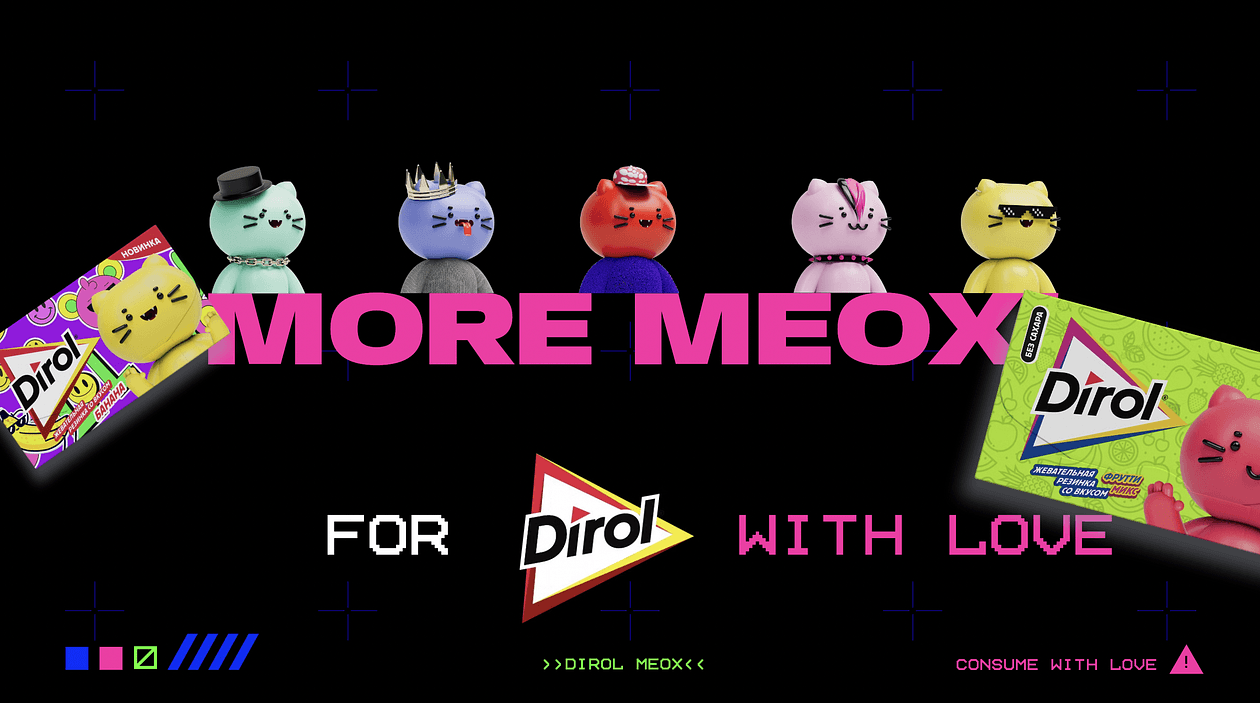
Dirol’s NFT-Powered Chewing Gum — concept by JETA
By combining collectible characters with the convenience of QR codes, Dirol can seamlessly integrate this innovative marketing strategy into their product line, creating deeper connections with their audience and enter the trend of digital collectibles.
Conclusion
The shift to Web3 represents more than just a technological evolution; it’s a fundamental change in how we interact with the digital world. As power shifts away from big data hoarders and back to individual users, brands have an unprecedented opportunity to create genuine connections with their audiences.
The future of the internet is here, and it’s decentralized, immersive, and full of possibilities. Are you ready to grow with Web3?
JETA.TEAM, as a 360 Marketing Agency, is committed to craft impactful campaigns for brands, startups, and Web3 projects. Share your perspectives and let’s discuss how Web3 can transform business nowadays.
More articles you may like:

Robots.txt? No, LLM.txt, Please: How to Boost Your AI SEO

7 Trends & Forecasts for 2026: AI, Culture, Design, and the Future of Marketing

Can AI Lead Creativity? JETA's CCO on Speed without Drift

The Imperative of Reintroducing Human Chaos into AI Creations

5 Unmissable Trends from Cannes Lions 2024: Shaping the Future of Advertising and Digital Marketing

6 Graphic Design Trends for 2025

From Viral Moment to Dubai Mall: How HSB by Hasbulla Became a Global Streetwear Success Story
2X Social Media Growth During 20% Market Drop: Electric Pawn Shop Case Study
McDonald’s Taps Into Anime Craze with the WcDonald’s Campaign: A Creative Review by JETA
The Dawn of Web3: Navigating the Future of the Internet

Charli XCX’s ‘brat’ Album Campaign: A Masterclass in Modern Music Marketing
Full-On Digital: The Evolution of Marketing and Advertising in the Modern Era