Find the original article on The AI Innovator — written by our CCO Tim Gareev.
The most memorable ads, films, stories and songs are rarely the most polished, clean or predictable. They jar the senses, they break rules and they risk looking foolish in the name of creativity. They carry a touch of strangeness that resists consensus.
Generative AI, meanwhile, has been trained to optimize for consensus. It gives us fluent sentences and glossy images, but it also narrows the output toward the safe middle. In doing so, it threatens to flatten the very cultural edge that makes work resonate.
Generative AI is a probability engine. It calculates the next most likely word, brushstroke, or pixel. That makes its outputs coherent but also eerily familiar. Midjourney’s dreamlike images, for instance, often seem cinematic yet repetitive; AI-written copy reads smoothly but rarely surprises. These systems produce the average, but not outliers.
In a landscape saturated with polished AI content, the messy human element may be the only thing that still cuts through.
Research already confirms this homogenizing effect. When writers use AI suggestions, their language shifts toward Western idioms, even if they began with distinct cultural voices. AI-generated stories, while polished, are more similar to each other than human-written stories, erasing diversity in expression. The models smooth over differences, making what’s average better but also making it harder to create differentiated work.
Creative culture does not emerge from the middle of the bell curve. It thrives at the edges. Apple’s “1984” campaign was dystopian and uncomfortable. Diesel’s “Be Stupid” reveled in absurdity. Both broke rules, and both entered the cultural bloodstream because of it. These campaigns would not have survived an AI’s optimization process, which tilts toward the familiar.
What makes us remember work is not its polish but its fracture points – the places it seems to defy convention, even at the risk of alienating some audiences.
Humans as injectors of chaos
That’s where human creators matter most. AI can churn out drafts at scale, offering endless plausible versions. But the human role is not to pick the safest of those versions, but to disrupt them. It’s to sharpen edges, embrace imperfections, introduce humor or tension that a statistical model would smooth away.
The art is in holding onto surprise. A clumsy turn of phrase, an offbeat image, a cultural reference that only makes sense in a certain community – these are the ruptures where originality lives. Instead of removing them, humans can lean into them, adding back the very friction that AI erases.
We’re entering an era where perfection is cheap.
There’s a wider risk, too. If creators rely uncritically on AI, cultural nuance itself may start to disappear. AI systems are not neutral – they reproduce the values and frames of their training data. The same prompt can produce individualistic, analytical answers in English and more holistic, collective ones in Chinese. Without human correction, AI may quietly tilt global expression toward whichever cultural patterns dominate its datasets.
That makes human intervention more than a creative preference – it’s a cultural safeguard. A refusal to let the jagged, idiosyncratic parts of expression vanish into statistical averages.
Risk as a creative strategy
Some argue that audiences prefer safety. Campaigns should be clear, familiar and frictionless. But history suggests otherwise. Innovation almost always comes from the unexpected. Risk draws attention precisely because it breaks with the expected. In a landscape saturated with polished AI content, the messy human element may be the only thing that still cuts through.
For creative teams, that means building processes that don’t just filter AI outputs for plausibility but actively hunt for the odd ones. To ask, “Which of these drafts feels wrong?” and then ask again, “Why might that be the most interesting?” Culture has always been shaped by those willing to pick the rough stone over the polished gem.
We’re entering an era where perfection is cheap. AI can polish everything. But polish without risk doesn’t create culture, it creates wallpaper. The future of creative work won’t be about rejecting AI, but about pairing its efficiency with human nerve. Machines can draft endlessly; humans must dare to distort, to exaggerate and to make things stranger.
More articles you may like:

Robots.txt? No, LLM.txt, Please: How to Boost Your AI SEO
7 Trends & Forecasts for 2026: AI, Culture, Design, and the Future of Marketing
Can AI Lead Creativity? JETA's CCO on Speed without Drift
The Imperative of Reintroducing Human Chaos into AI Creations
5 Unmissable Trends from Cannes Lions 2024: Shaping the Future of Advertising and Digital Marketing
6 Graphic Design Trends for 2025
From Viral Moment to Dubai Mall: How HSB by Hasbulla Became a Global Streetwear Success Story

2X Social Media Growth During 20% Market Drop: Electric Pawn Shop Case Study

McDonald’s Taps Into Anime Craze with the WcDonald’s Campaign: A Creative Review by JETA
The Dawn of Web3: Navigating the Future of the Internet
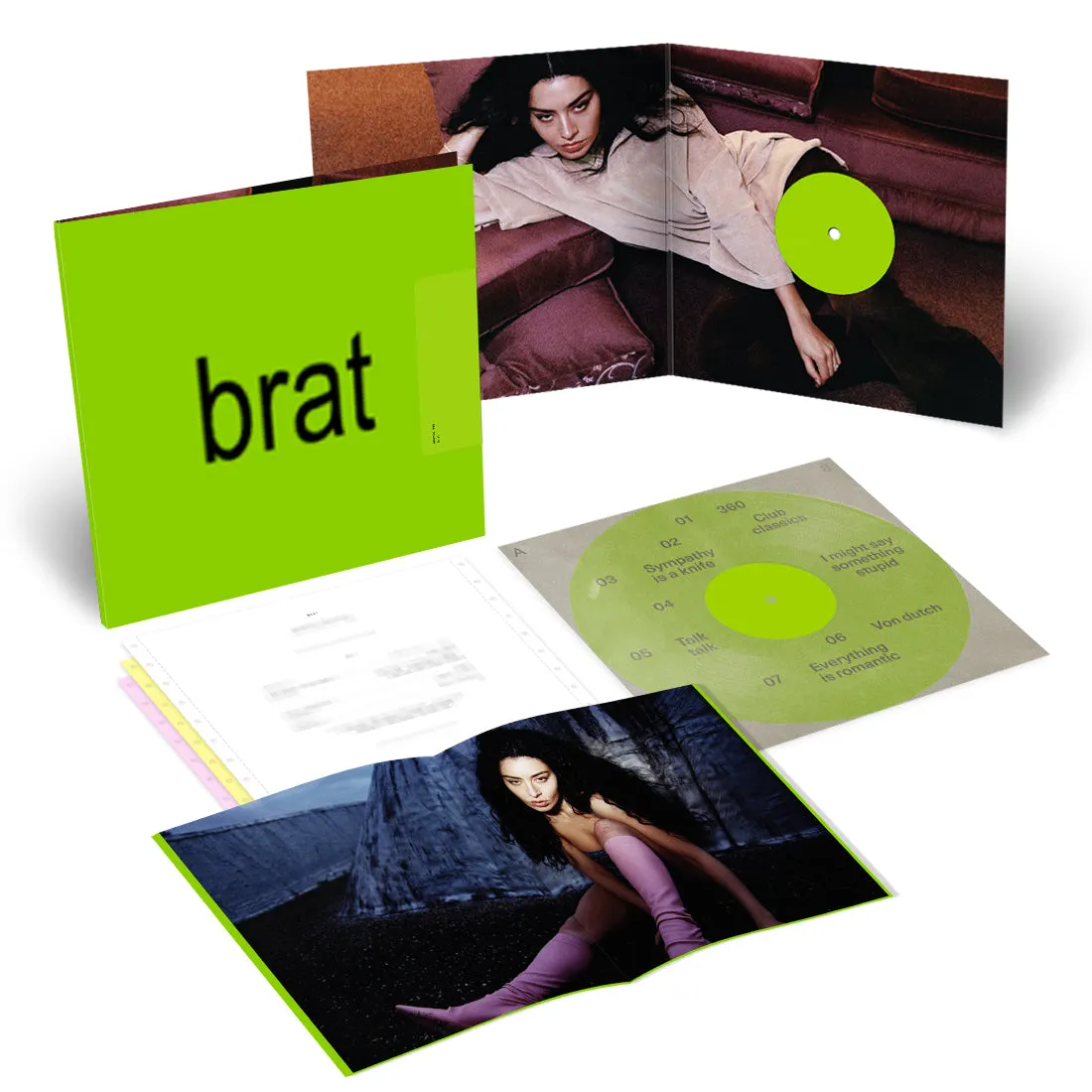
Charli XCX’s ‘brat’ Album Campaign: A Masterclass in Modern Music Marketing
Full-On Digital: The Evolution of Marketing and Advertising in the Modern Era